
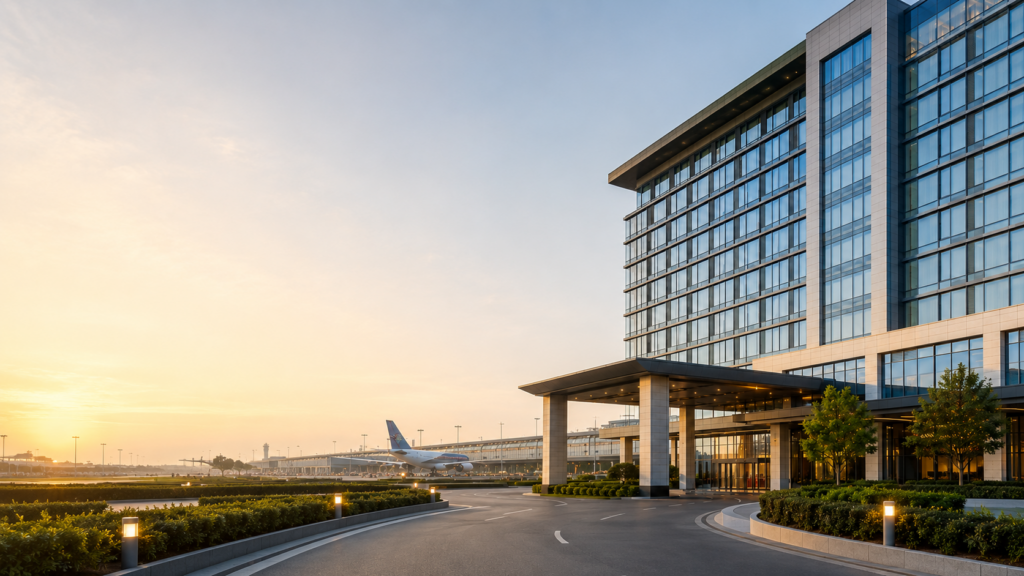
A major airport hotel with around 400 rooms had a hidden problem in its bathroom pipework — years of hair, limescale and organic build-up that slowed drainage and forced staff into constant manual cleaning. Thrive recommended DRAINZAP, a clean-chemistry drain treatment that foams through the pipe and dissolves build-up in place. Camera footage before and after told the story: clogged, slime-coated pipework restored to clear, free-flowing drains.
Here’s what happened, what blocked drains really cost a hotel, and how a foaming drain treatment fits into a smarter maintenance routine.
Who should read this
This is for facilities managers, hotel operations leads, and cleaning teams in hospitality — anyone responsible for keeping bathrooms guest-ready while keeping a lid on maintenance spend.
What causes blocked drains in hotel bathrooms?
High-traffic bathrooms take a beating. In a busy hotel, drains fill up fast with a mix of:
- Hair — sheds in every shower and bath, tangles in the pipe, and traps everything else.
- Soap and product residue — leaves a sticky film on the inside of the pipe.
- Organic matter — skin, body oils and grime that feed slime and odour.
- Limescale — hard-water minerals that harden inside pipework and narrow the flow.
Limescale is a bigger problem in some parts of Australia than others. Adelaide and Perth have the hardest water in the country, so scale builds inside pipes and fixtures faster there. Sydney sits in the middle, and Melbourne’s water is soft. In hard-water areas, scale slowly narrows pipes and restricts flow — exactly the kind of hidden build-up this airport hotel was facing.
Left alone, the mix narrows the pipe until water backs up. By then you’re not cleaning a drain — you’re paying to clear a blockage.
What the airport hotel did
The hotel sat inside a major airport, so its bathrooms were in near-constant use. Staff faced three problems in the pipework: significant hair accumulation, heavy limescale, and organic build-up they couldn’t easily reach. They needed something that worked on hidden build-up and cut down the daily manual cleaning.
Thrive recommended DRAINZAP for the bath pipework. The method is simple: run warm water through the drain, add the product, and leave it to work — an hour or more, or overnight for the toughest build-up. DRAINZAP foams as it activates, so staff could see it working its way through the system.
The results, confirmed on camera:
- Cleared the legacy build-up. DRAINZAP broke down and removed the hair, limescale and organic matter.
- Restored flow and visibility. Pipework that had been hidden and clogged came back clear.
- Cut the manual work. Less daily trap-clearing and reactive cleaning.
- Fast and low-disruption. Easy to apply, with little change to the existing cleaning routine.
“A positive guest experience is a priority for us, and ensuring showers work as they should is a key part of that. I’m amazed at how quickly DRAINZAP worked and how clean the pipes are.” — Hotel operative, airport hotel
What does a blocked drain actually cost a hotel?
This is where it adds up — and why prevention pays.
The plumber bill. In Australia, commercial blocked-drain jobs commonly run $500 to $800 or more, and severe blockages can pass $2,000. After-hours and emergency callouts add another 20–50% on top. One blocked bath drain is an annoyance. A site full of them, cleared reactively, is a budget line.
The bigger incidents. Industry estimates put a single major hotel plumbing incident at $5,000 to $50,000 in immediate repairs — before you count lost room nights.
The reviews. Bathrooms are the number-one room-level driver of negative hotel reviews, and slow drains are among the most photographed complaints. One analysis estimates a single prevented negative bathroom review is worth $1,200 to $2,000 in future booking value. A drain that backs up mid-stay doesn’t just cost a callout — it can cost the next booking.
The labour. Every hour spent clearing traps and chasing reactive blockages is an hour not spent on higher-value work. Cutting that down frees your team for the rest of the job.
Why caustic drain cleaners aren’t the long-term answer
Traditional caustic drain cleaners can clear a blockage, but they come with trade-offs:
- They’re harsh on pipework and seals, and repeated use can damage older pipes.
- They’re hazardous to handle and store.
- They treat the symptom, not the build-up further down the line.
DRAINZAP takes a different approach. It’s a clean-chemistry formula that dissolves hair, slime and organic build-up without caustic chemicals. It’s non-corrosive and septic safe — gentle on pipework while still cutting through the build-up. For facilities teams, that protects the assets you’re paying to maintain, instead of slowly wearing them out.
How DRAINZAP fits a preventive routine
The airport hotel used DRAINZAP to clear an existing problem. The bigger win is using it before the problem starts.
- Showers, sinks and baths. Made for everyday drainage points across guest rooms and back-of-house.
- Simple to apply. Warm water, one scoop, leave it to work. No special training needed.
- Built into the schedule. A regular dose stops hair and organic build-up hardening into a blockage — the difference between a planned routine and an unplanned emergency callout.
Fewer reactive callouts, less labour lost to traps, no caustic damage to pipes, and bathrooms that stay guest-ready. That’s the sum most hospitality and facilities teams are working through right now.
The bottom line
An airport hotel cleared years of hidden hair, limescale and organic build-up from its bath pipework with DRAINZAP — restoring flow, cutting manual maintenance, and keeping bathrooms guest-ready, all confirmed on camera. For Australian hotels facing the same high-traffic drains and, in hard-water regions, the same limescale, a clean-chemistry drain treatment is a low-cost way to avoid the much larger cost of reactive plumbing.
See what regular drain treatment could save your site. Talk to the Thrive team at sales@thrivebio.com.au or (02) 8379 2000, or run the numbers on the Thrive ROI calculator.
Frequently asked questions
What is DRAINZAP? DRAINZAP is a Thrive drain treatment that dissolves hair, slime and organic build-up in showers, sinks, baths and other drainage points. It uses a foaming, clean-chemistry action to clear build-up inside the pipe, without caustic chemicals.
What causes drain blockages in hotels? Mostly hair, soap and product residue, organic matter, and — in hard-water areas — limescale. High-traffic hotel bathrooms build these up quickly, narrowing the pipe until water backs up.
Is DRAINZAP safe for pipes and septic systems? Yes. DRAINZAP is non-corrosive and septic safe, so it clears build-up without the pipe damage linked to harsh caustic drain cleaners.
How much can a blocked drain cost a hotel in Australia? Commercial blocked-drain callouts commonly run $500 to $800 or more, with severe blockages exceeding $2,000 and after-hours fees adding 20–50%. A major plumbing incident can cost far more once repairs and lost bookings are counted.
How is DRAINZAP different from caustic drain cleaners? Caustic cleaners are harsh on pipes and seals and can damage older pipework with repeated use. DRAINZAP dissolves the same build-up without caustic chemicals, and is non-corrosive and septic safe.
Sources
- Yellow Pages — Australian Plumbing Cost Guide (2026)
- J & J Plumbing Services — Average Cost to Fix Blocked Drains, Canberra (Dec 2025)
- Sewer Surgeon — Average Cost of a Blocked Drain Plumber in Australia
- Oxmaint — Hotel Bathroom Maintenance Guide: ROI and Guest Impressions (Feb 2026)
- Inlet Mechanical — Hotel Plumbing Problems: Preventing Guest Complaints and Downtime (Dec 2025)
- WaterScore — Water Hardness in Perth, Suburb-by-Suburb (Mar 2026)
- Level Plumbing Adelaide — Hard Water in Adelaide (Sep 2025)